

CreativeExplorer-MichaelMandaville.com
I work in Film. I live in Martial Arts. I thrive in Imagination.


"Journey So Dreams May Come" - Discussion Guide - CLICK THATAWAY >




HISTORY AND BARBARY PIRATE SLAVERS
HISTORY AND BARBARY PIRATE SLAVERS
"Those who do not remember history are condemned to repeat it." The past may not repeat but it rhymes with human behavior, grand events moving in recognizable directions and more.
Study history to learn, think critically, think more. And don't believe all you read in today's world without scrutiny and analysis.
1. Introduction: Few people know the history of the Barbary Pirates and their slave trade against Europe.
We know the name through romanticized adventure movies and perhaps Disneyland. But the Barbary pirates or corsairs were slavers and murderers notorious throughout Europe.
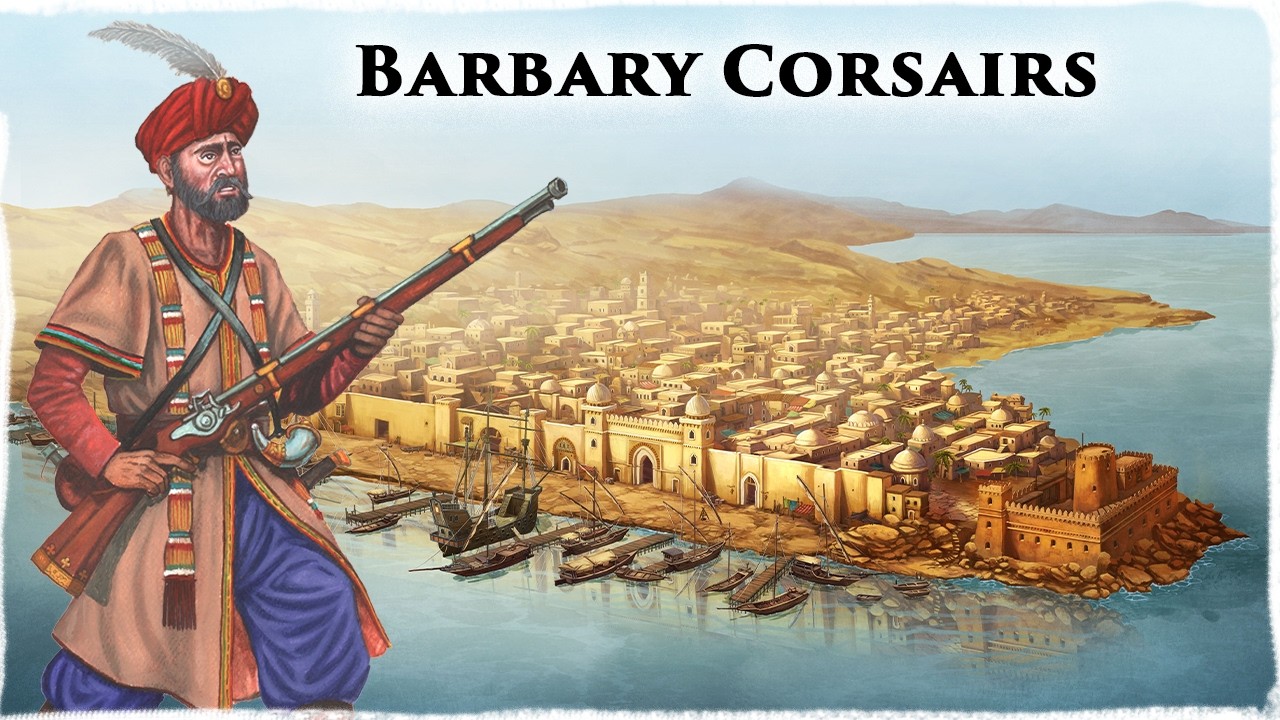
The word “pirate” often arrives wrapped in stage fog. It calls up bright sails, swaggering captains, comic parrots, hidden treasure, and the kind of danger that stays safely inside a story. The Barbary pirates entered popular memory through that haze. Their names and symbols survived in novels, paintings, operas, and later in film, where the sea could be turned into a theater of adventure. Yet for the people who lived along the coasts of Spain, Italy, France, Ireland, Greece, and beyond, the Barbary corsairs were not a romance. They were a real and recurring terror.
From the late medieval period into the early modern age, corsairs operating from North Africa attacked ships, seized cargoes, raided coastal settlements, and carried off men, women, and children into slavery. Fishing boats vanished. Merchant crews were chained. Villages were stripped of their people. Families waited years for ransom money that often never came. Church collections were taken up to redeem captives. Religious orders specialized in trying to buy prisoners back. In ports across southern Europe, the fear of sudden capture became part of ordinary life.
The scale of this system was large enough to shape diplomacy and war. States paid tribute to avoid attack. Navies were sent to punish corsair strongholds. Insurance, fortification, and coastal watch systems grew in response. The effect was not limited to a few spectacular incidents. It was a long pattern of predation tied to commerce, politics, and empire. The Barbary corsairs were not merely freebooters drifting outside government control. In many periods they operated through organized structures, with backing from rulers, investors, and officials. Piracy, privateering, captivity, ransom, and state revenue overlapped.
That overlap matters because it cuts through the false image of picturesque disorder. The Barbary world of corsairing was brutal but not random. Captives had value. Cargo had value. Ships had value. Human beings were sorted, priced, exchanged, and worked. Some ended up as rowers in galleys. Some labored in quarries, dockyards, and households. Some were held in prison compounds while relatives or states tried to ransom them. Some converted and joined the society that had captured them. Some died before release ever came.
Europe remembered this history in fragments. There were sermons, petitions, diplomatic papers, ransom records, memoirs, and literary echoes. But later memory often softened the edges. The pirate became a colorful figure; the slave market receded. This is why the history still surprises many readers. They may know the phrase “Barbary Coast,” yet not know that thousands of Europeans were held there in bondage. They may know the Barbary Wars from American history, yet not grasp the wider centuries-long system that made those wars possible. They may know Miguel de Cervantes as the author of Don Quixote without knowing that he spent years enslaved in Algiers after capture by corsairs.
To recover this history is not to replace one myth with another. It is to describe a violent system plainly. The Barbary corsairs were part pirate, part privateer, part state instrument. They raided Christian shipping and coasts, and they fed slave markets with European captives. They were feared throughout much of Europe because the fear was earned. If their story has too often been romanticized, the corrective is not melodrama but clarity: this was a world of kidnapping, coercion, ransom, forced labor, massacre, and organized profit.
2. Cervantes and his enslavement written within his great novel Don Quixote.
Miguel de Cervantes gives this history a human face. Before he became one of the central figures of world literature, he became a captive of the Barbary corsairs. In 1575, while returning to Spain, Cervantes and his brother were seized at sea and taken to Algiers. He remained there for about five years, a prisoner and slave in one of the major corsair capitals of North Africa. Those years marked him deeply, and the mark remained in his writing.
Cervantes did not merely hear of captivity from others. He lived under its pressure. He experienced the uncertainty of ransom, the hierarchy among captives, the daily negotiations between hope and despair, and the humiliations of dependence. He made repeated escape attempts, each failure raising the risk of harsher punishment. That persistence became part of his legend, but it also reveals the psychological truth of captivity: a prisoner does not stop calculating exits, even when the odds are poor.
Algiers in Cervantes’ time was a place where human traffic and political power met. Captives could be held in prisons, used for labor, sold, exchanged, or ransomed. Social rank mattered. Letters of recommendation and proof of status mattered. Cervantes reportedly carried papers that suggested he was a man of consequence, which increased the price expected for his ransom and may have prolonged his captivity. In that cruel arithmetic, esteem became another burden.
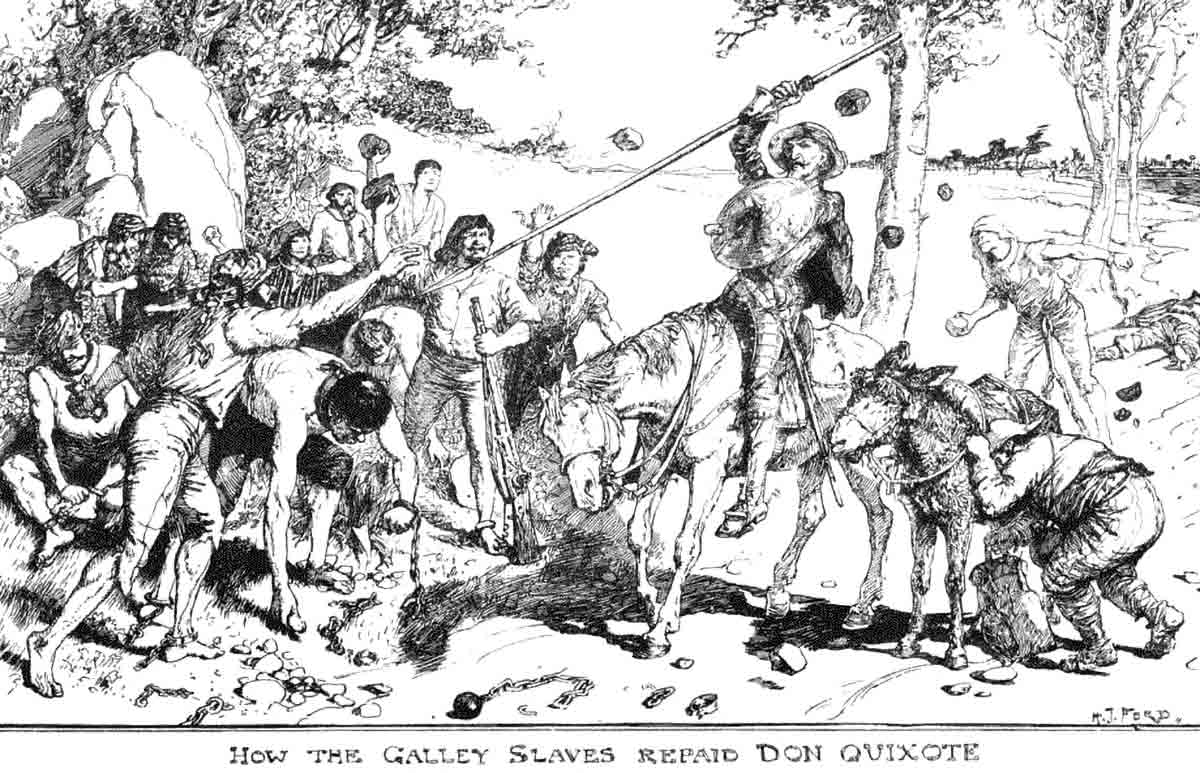
The experience did not produce a single autobiographical confession. Instead, it echoed through Cervantes’ fiction and drama. Captivity appears in his work not as distant color but as lived knowledge. In Don Quixote, the famous “Captive’s Tale” draws directly on the Mediterranean world of enslavement, ransom, escape, and cross-cultural encounter. The details carry the texture of someone who knew the system from within: the instability of fortune, the dependence on intermediaries, the role of religious identity, the ambiguous moral space created by coercion, and the strange intimacy forced by captivity.
What makes Cervantes especially important in this history is that he preserves complexity without softening violence. The world of Barbary captivity in his work is neither cartoon nor pure abstraction. It is a place where courage, greed, faith, opportunism, loyalty, and betrayal all coexist. This is one reason his treatment still feels alive. He does not flatten the experience into a single lesson. He shows that slavery and imprisonment distort every human relationship around them.
At the same time, Cervantes’ writing reminds us that the Barbary corsair system was not some marginal curiosity. It was central enough to Mediterranean life that one of Europe’s greatest novels bears its trace. Don Quixote is famous for its play with illusion and reality, with noble fantasy crashing against the hard world. There is an odd fitness, then, in the fact that its author knew firsthand how false glamour can conceal raw force. No romantic pirate image survives contact with captivity as Cervantes understood it.
His years in Algiers also reveal how porous the Mediterranean could be, even in conflict. Captives, converts, merchants, diplomats, clerics, soldiers, and renegades moved through the same space. Enslavement did not suspend culture; it intensified exchange under coercive terms. Cervantes observed a world in which religious war, criminal enterprise, state policy, and personal survival were all entangled. That entanglement would define the wider history of the Barbary corsairs as well.
When readers encounter Cervantes only as a literary monument, they can miss the extent to which his imagination was sharpened by danger, confinement, and proximity to slavery. His captivity belongs not at the margins of his biography but near its center. It helps explain the toughness beneath his humor, the realism beneath his irony, and the constant awareness in his work that freedom is fragile. In that sense, the history of the Barbary pirates is written not only in archives and naval records, but in the inner life of European literature itself.
3. Who were the Barbary Pirates?
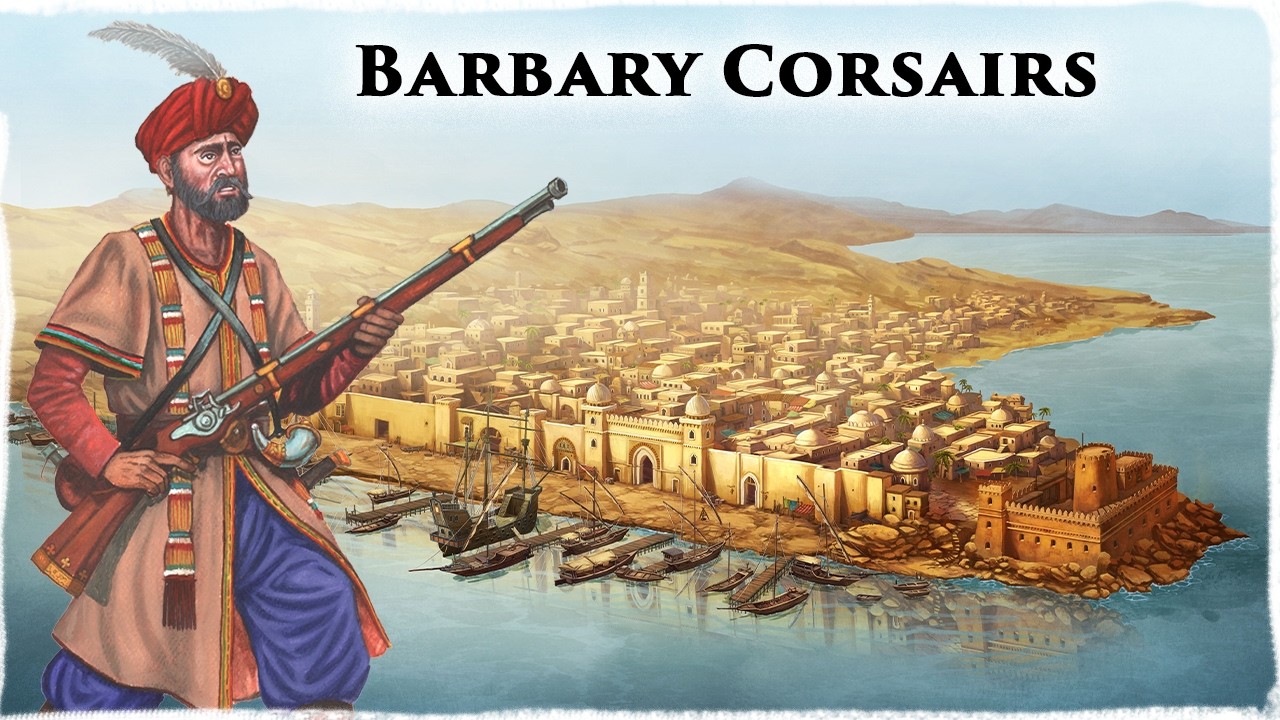
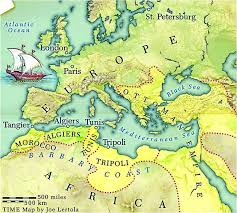
The term “Barbary pirates” refers broadly to corsairs operating from the North African coast historically known in Europe as Barbary. This region stretched across the southern Mediterranean, including the coastal zones of present-day Morocco, Algeria, Tunisia, and Libya. Its geography mattered. Facing the sea lanes of the Mediterranean and positioned near the Atlantic approaches through the Strait of Gibraltar, it sat astride some of the busiest maritime routes in the early modern world.
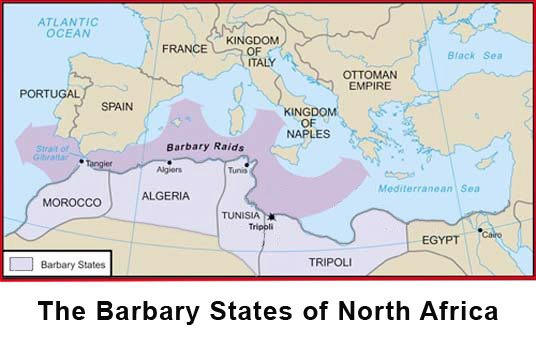
The principal corsair centers were Algiers, Tunis, Tripoli, and ports in Morocco such as Salé and Rabat. From these bases, corsair fleets could strike merchant shipping, harry fishing traffic, and launch coastal raids into southern Europe and even farther north. The Mediterranean narrowed the distance between danger and safety. A fast ship leaving North Africa could fall on an Italian or Spanish coast with little warning. Over time, corsair ventures reached well into the Atlantic, hitting places that did not think of themselves as part of a Mediterranean conflict at all.
These corsairs were not all alike. Some were locally rooted North Africans. Some were Ottoman subjects. Some were converts or renegades from Europe who entered corsair service after captivity or by choice. Some commanded ships on behalf of rulers; others were private operators with official sanction. This mixed composition gave the corsair world flexibility. Seamanship, intelligence, language skills, and knowledge of European coasts could come from many sources.
Their structure was more organized than the word “pirate” suggests. In Algiers and Tunis, captains formed a recognizable class. Ships were often outfitted by wealthy backers who expected a share of the proceeds. Authorities regulated, taxed, and benefited from the system. Prize-taking fed urban economies. Captives could be sold, ransomed, or used as labor. Political leaders depended in part on corsair revenues, and corsair success enhanced military prestige. This was not simply criminality on the edges of the state. It was often criminality braided into statecraft.
Their crimes against Europeans were varied but connected. At sea they attacked merchant vessels, seized cargo, and enslaved crews and passengers. On land they raided coastal villages and islands, burning homes, carrying off inhabitants, and leaving surviving communities traumatized and depopulated. Murder accompanied resistance. So did assault, extortion, and destruction. Even where large massacres did not occur, the threat of capture worked as a weapon in itself. Coasts had to be watched. Towers had to be built. Communities had to organize alarms and flight routes.
The practice of ransom gave corsairing a grim predictability. A captive was a source of income. Families, towns, religious orders, and governments might all be pressed into negotiations. This system deepened the cruelty because imprisonment was prolonged by financial calculation. One captive might be redeemed quickly; another might remain for years because his price was too high or his connections too weak. The same raid could produce very different fates.
The numbers involved were not trivial. Estimates vary, as they often do in premodern history, but the burden on Europe was substantial. One widely cited figure notes that by 1650 more than 30,000 captives were imprisoned in Algiers alone. That snapshot does not represent the whole system across time and across all Barbary ports. It simply shows the scale one major center could contain at a single moment. When multiplied across decades and across several states, the human toll becomes much larger.
This helps explain why Barbary corsairing left such a deep mark on European memory. It was not merely a hazard of shipping. It was a sustained system of predation directed at human beings as movable property. Whole coastal societies adapted to it. Bell towers, fortified churches, lookout posts, and local militias were not overreactions. They were answers to a real pattern of abduction and enslavement.
4. Barbary Pirates were Muslim and regarded their activity as a ‘naval jihad’.
The Barbary corsairs operated in Muslim-ruled polities, and religion formed an important part of the language through which conflict was understood in their age. That much is historically plain. The corsair world joined material profit, state interest, military ambition, and confessional struggle. In the early modern Mediterranean, these things often reinforced each other.
On the North African side, corsair attacks could be described within the vocabulary of holy struggle against Christian enemies. On the European side, anti-corsair campaigns were likewise cast in religious terms. The Mediterranean was not modern secular space. Faith shaped law, legitimacy, symbolism, and public morale. Maritime violence existed inside that framework.
For the Barbary states and their allies, the idea of struggle against Christendom could dignify corsair warfare and fold it into a wider political order. It gave raids and prize-taking a moral language beyond profit. Yet the reality was never neat. Corsair crews included converts, opportunists, and adventurers whose motives were mixed. Muslim rulers wanted revenue and leverage. Captains wanted prizes. Investors wanted returns. Enslavers wanted labor and ransom. Religious sanction did not replace these aims; it often sat beside them.
The phrase “naval jihad” may be used today as shorthand to describe the religious framing of corsair warfare, and there is a historical basis for saying that some contemporaries understood these conflicts in that way. The corsairs were not a single ideological movement in the modern sense. They were part of a political and economic system in which religious identity sharpened conflict and justified violence, while material interests kept the machinery running.
The Barbary corsairs were Muslim in the sense that they arose from Muslim-ruled societies and often acted under Muslim authorities with explicitly Islamic political legitimacy. Their enemies in Europe were often defined as Christian foes. Captivity, conversion, ransom, and slavery all unfolded in a confessional world.
Religion was real, public, and politically potent in Barbary corsairing. It helped authorize violence. It shaped identities and legal categories. It deepened the symbolic meaning of capture and redemption. Yet religion worked together with commerce, empire, and local power rather than floating above them. The corsair ship sailed under both banner and balance sheet.
5. Corsair activity: raids, enslavement, destruction, piracy and more.
Corsair activity ranged from opportunistic ship seizure to full coastal devastation. A merchant vessel might be intercepted, searched, stripped, and condemned as prize. Its crew could be chained and brought to North Africa. A shoreline settlement might wake to gunfire, fire, and the crash of doors. In some raids the main object was captives. In others it was plunder, or punishment, or both. The line between piracy and war was often deliberately blurred.
Ottoman support gave much of this activity staying power. Algiers, Tunis, and Tripoli stood in varying relationships to the Ottoman Empire, from loose allegiance to deeper military and political dependence. Ottoman backing mattered in several ways. It conferred legitimacy, supplied a larger imperial frame, and helped turn local corsair ports into armed maritime states. In the sixteenth century, figures such as Barbarossa helped fuse North African corsair power with Ottoman expansion. This made corsairing more than local banditry. It became part of regional strategy.
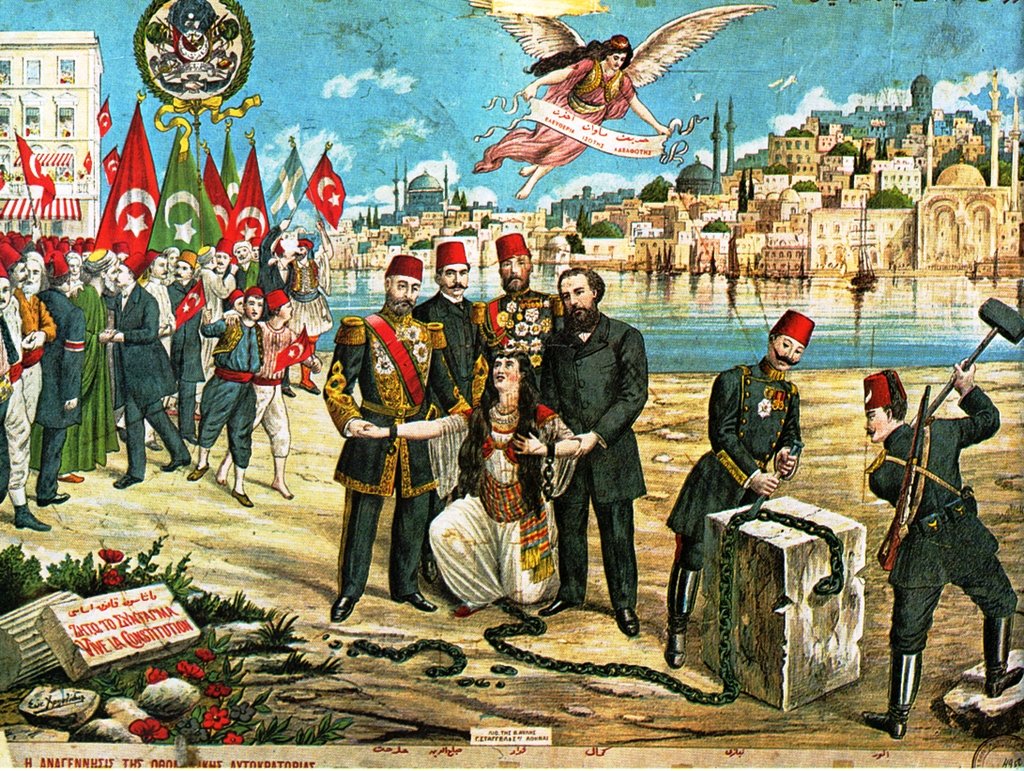
Even when local rulers acted with autonomy, the Ottoman connection strengthened the system. European powers had to reckon not only with individual captains but with organized regimes that could negotiate treaties, demand tribute, imprison captives on a mass scale, and use maritime violence as an instrument of policy. The result was a durable system of state-supported predation that neither moral protest nor occasional retaliation could easily end.
The crimes tied to this system were cumulative. Seizure at sea fed slave markets. Raids depopulated coasts. Destruction of boats and villages undercut local economies. Captivity generated ransom networks that drained wealth from European communities already under pressure. Fear altered settlement patterns. Some places were abandoned; others fortified themselves heavily. The very geography of coasts changed under the pressure of repeated attack.
The Chios massacre of 1822 belongs to a later phase of Ottoman violence rather than to the classic high age of the Barbary corsairs, yet it remains relevant because it reveals the same larger world in which enslavement, massacre, and forced displacement could still accompany imperial conflict in the eastern Mediterranean.
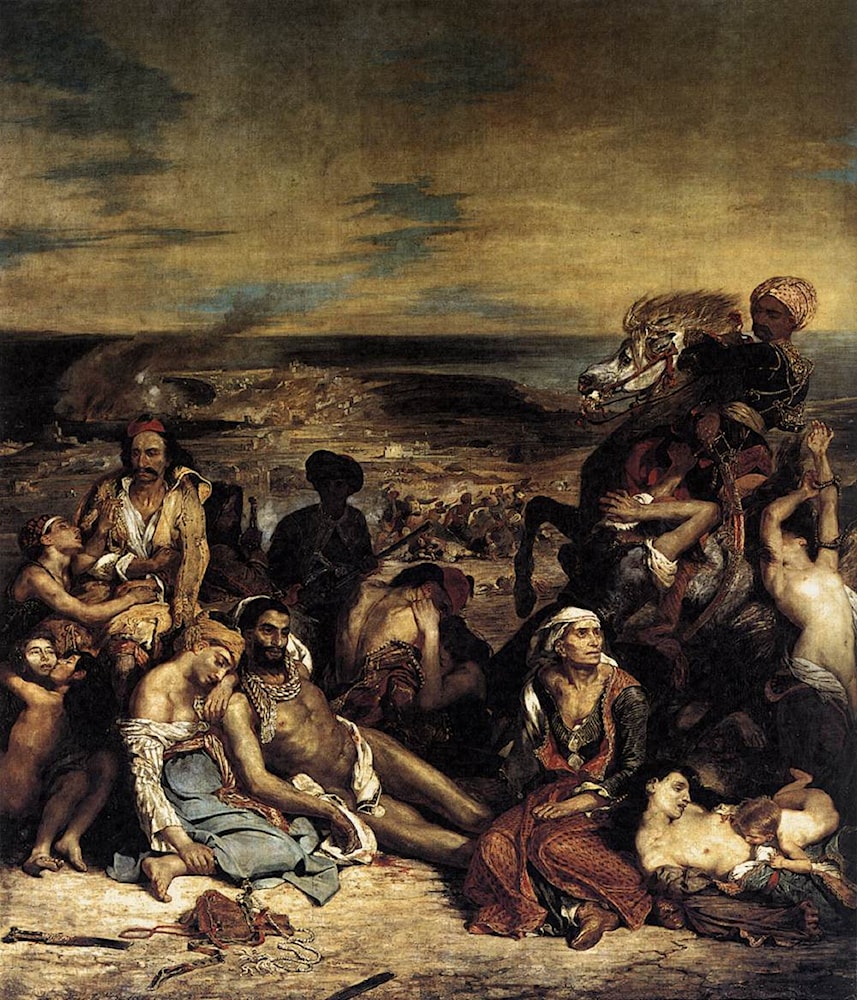
During the Greek War of Independence, Chios suffered one of the most notorious atrocities of the age. Contemporary and later estimates vary, but all point to catastrophic loss. It has been estimated that roughly four-fifths of the island’s pre-catastrophe population of 100,000 to 120,000 were killed, enslaved, or forced to flee. Some estimates hold that up to 100,000 were killed or enslaved. Others give more specific figures of at least 25,000 killed, 45,000 enslaved, and 10,000 to 20,000 fleeing the island. Other accounts put those slaughtered above 50,000, with a similar number enslaved.
These figures should be read as estimates from a traumatic event, not as mathematically settled totals. But even allowing for uncertainty, the meaning is unmistakable. Chios became a byword for the destruction of a civilian population through killing, enslavement, and terror. It shocked European opinion because it exposed, in concentrated form, a violence that many in Europe already associated with Ottoman and corsair power in the Mediterranean world. The massacre was later immortalized in art, but its first reality was not symbolic. It was human ruin on a mass scale.
The history of Mediterranean coercion did not end neatly with one famous treaty or one naval defeat. Structures changed, powers rose and fell, but the traffic in captives and the use of enslavement as a weapon remained present across centuries. The Barbary corsairs belong to that longer history of organized violence at sea and along the littoral of empire.
6. How many people were enslaved?
The total number of Europeans enslaved through the Barbary system remains debated. Historians disagree because records are uneven and the trade stretched across centuries and jurisdictions. But no serious account treats it as marginal. Tens of thousands were held at particular moments, and over the long duration the cumulative number rises much higher. The figure of more than 30,000 captives in Algiers alone by 1650 offers one hard point in a larger landscape of uncertainty. It shows that captivity was not anecdotal. It was systemic.
The human meaning of that system becomes clearest in local tragedies. One of the most famous is the Sack of Baltimore in Ireland in 1631. Baltimore, a village in West Cork, lay far from the Mediterranean core of the problem, which is exactly why the raid struck later memory so strongly. Barbary raiders reached the village at night, seized over a hundred inhabitants, and carried them away to slavery in North Africa. Some reports gave even higher figures. Families were torn apart in an instant. Many of the captives vanished into labor, servitude, or sexual exploitation. Only a very small number ever returned.
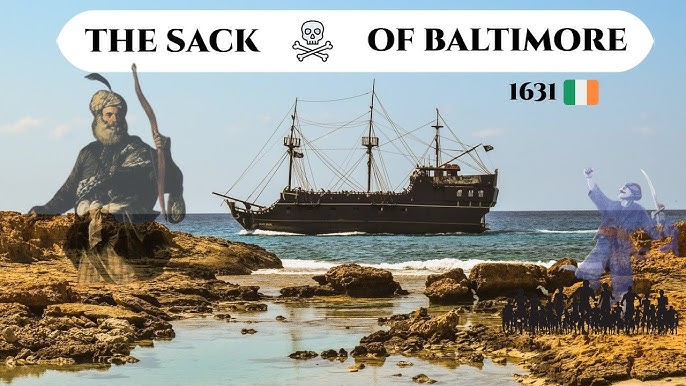
The aftermath was severe. The village was effectively broken. Survivors moved away, and Baltimore stood nearly deserted for generations. What happened there was not just a raid but a demographic wound. A community was hollowed out by abduction. The event remains one of the starkest examples of how Barbary slaving reached beyond the warm waters of the inner Mediterranean and into the edge of the Atlantic world.
Modern readers often struggle to connect that history to present-day Europe without collapsing important distinctions. The responsible way to do so is to compare patterns of coercion and intimidation without pretending that different centuries are identical. Modern Europe has experienced extremist violence claimed in the name of Islam, but those acts belong to a very different political and technological world from that of the Barbary corsairs.
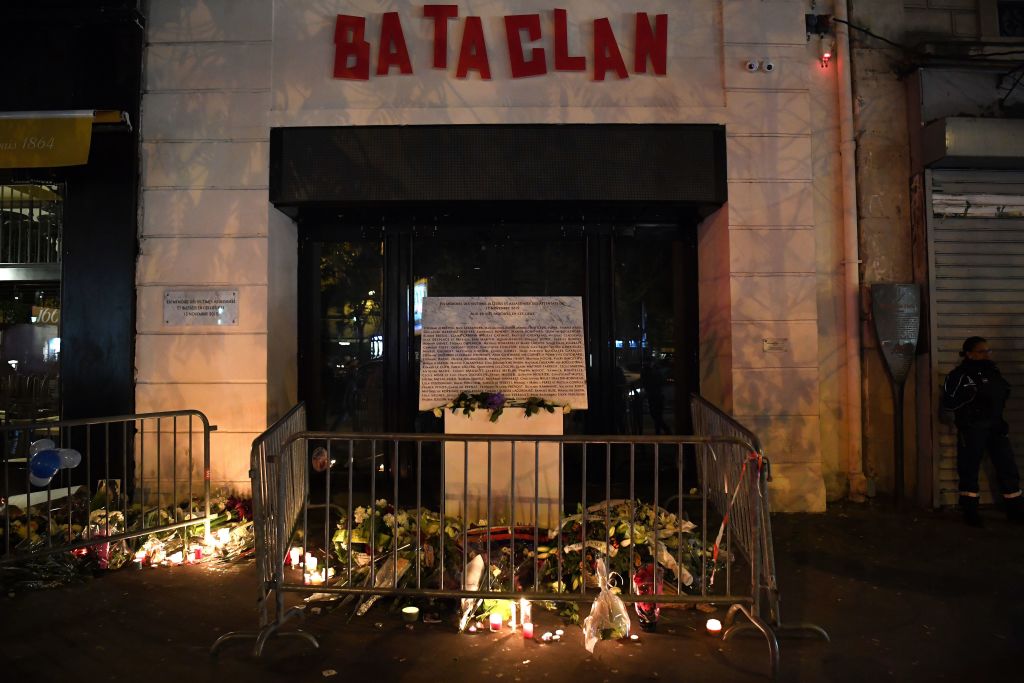
Charlie Hebdo and the Bataclan attacks in France were acts of modern jihadist terrorism, not piracy, privateering, or state corsairing. Charlie Hebdo involved the targeted murder of journalists and staff after publication of cartoons, while the Bataclan attack formed part of a coordinated mass-casualty assault in Paris. Both were aimed at civilians and intended to terrorize a broader society. They belong to the history of extremist violence, propaganda, and urban mass murder in the twenty-first century.

The Cologne New Year’s Eve attacks were different again. They were not the same kind of organized ideological massacre as Bataclan or Charlie Hebdo. They involved widespread sexual assaults and thefts committed amid public disorder. The events provoked intense debate about policing, migration, public safety, and the failures of authorities to respond clearly and quickly. Terrorist attacks, public-order failures, and organized abuse scandals are separate phenomena, even when they overlap in public discussion.
Still, it is not irrational that Europeans sometimes reach for older historical analogies when faced with violence, intimidation, or official denial. Memory works by resemblance. A society that once feared slave raids may respond sharply to later events that seem to involve coercion, impunity, or attacks on civilians carried out under religious or quasi-religious banners. The task of history, however, is to keep resemblance from turning into confusion. The Barbary corsairs enslaved captives through an early modern maritime system. Modern extremist networks radicalize, recruit, and attack through entirely different means.
7.Is it similar to today’s terrorist jihad?
The Barbary corsairs belonged to a world in which coercion traveled by ship. Their violence depended on maritime reach, weak coastal defense, slave markets, and political arrangements that turned captives into revenue.
Modern Europe faces different pressures. Some contemporary observers use the phrase “land jihad” to describe a fear that coercive religious extremism now seeks influence within European societies rather than from offshore. One is terrorism, as seen in attacks such as Charlie Hebdo and Bataclan, where ideological extremists used spectacular violence against civilians. Another is public contest over law, authority, and social norms, including demands by some activists or preachers for forms of religious regulation that conflict with liberal democratic law.
A third is the use of public space in ways that some citizens interpret as assertion or provocation, including highly visible forms of collective demonstration or worship. Yet another is organized criminal abuse, including cases where institutional actors failed to protect victims because of incompetence, fear, social pressure, or political caution.
The Rotherham abuse scandal stands as one of the clearest examples of such institutional failure. Official investigations found that large numbers of children were sexually exploited over many years and that agencies repeatedly failed to respond adequately to charges of investigating primarily Pakistani rape gangs because officials feared they would be labeled “Islamaphobic” or ‘racist’. This mental weakness of authority in the face of serious criminal abuse was the breakdown of safeguarding, policing, local governance, and moral courage. Authorities were found to have neglected victims and missed or avoided obvious warning signs. Institutional language matters here because the scandal was, above all, a criminal scandal of abject failure: failure to listen, failure to act, failure to protect.This situation reminds us that societies pay dearly when they refuse to name abuse.
The Barbary corsairs were real. Their slave trade against Europeans was real. Their violence was often justified within the political and religious frameworks of their time, and it was supported by regimes that profited from it. Modern Europe also faces real threats, including jihadist terrorism, predatory criminality, and occasions when public institutions fail gravely.
The history of the Barbary pirates should therefore be remembered not as a costume drama but as a warning about what happens when predation becomes normalized and profitable. Along the coasts of Europe, people once feared the sudden sail on the horizon because it could mean chains, ransom, exile, or death.
In modern Europe, the forms of threat have changed, but the need for honesty has not.


Did You Know...
... if you improve 1/2% each day, then you will be 267% better over one year? Who can compete with that?
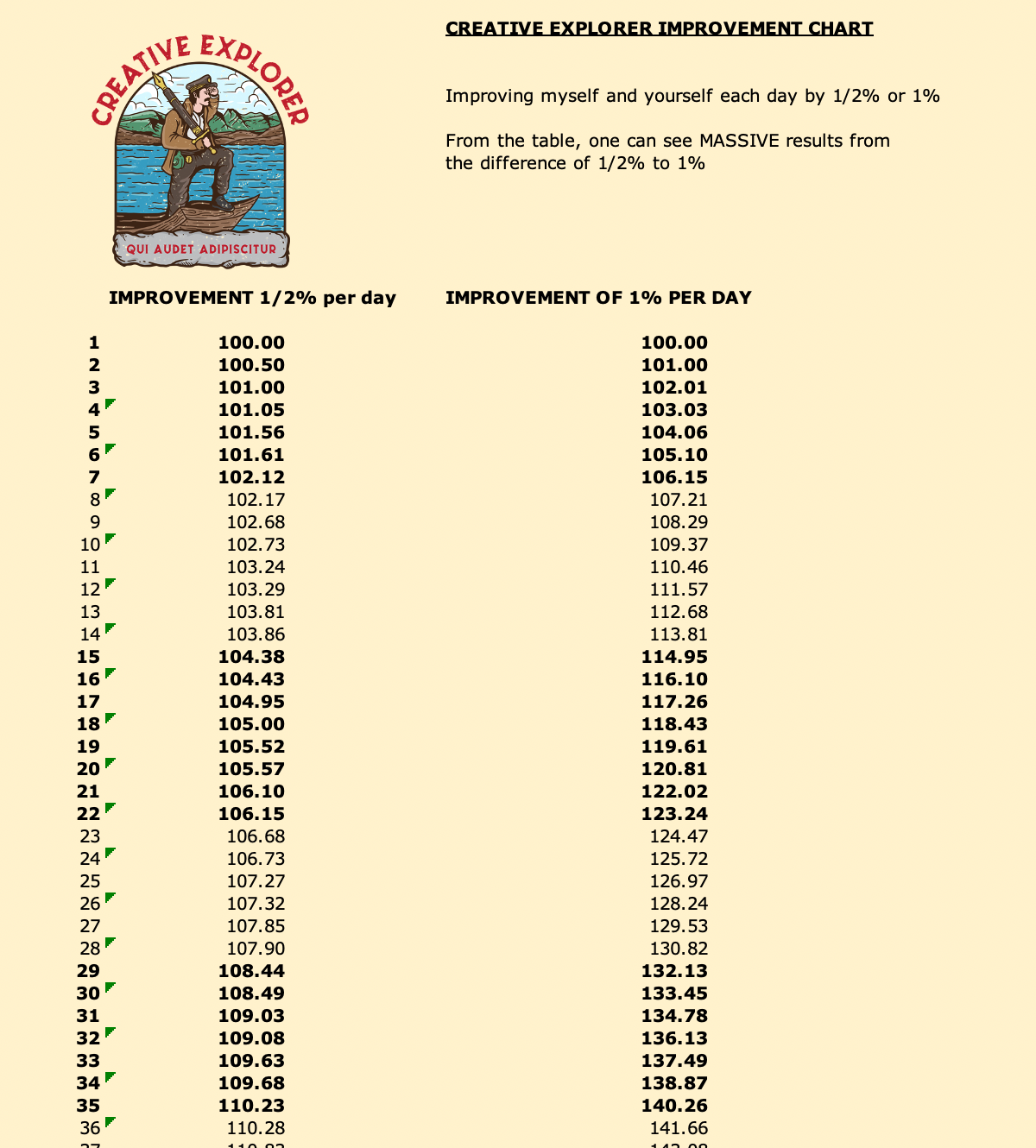
Setting Yourself Up for Success usually doesn't mean one big jump but rather incremental change day after day. Think of it like a ocean wave, moving far out in the Pacific with almost an undetectable push...finally with the power and grace of an ocean wave onto the beach. Create your own metaphor to embrace small habits with a huge future impact.
