Pop Culture Is Upstream of Politics — And Citizen Vigilante Just Proved It
Andrew Breitbart said it plainly: "Politics is downstream from culture." He was right then. He's more right now. When a low-budget action film starring a disowned Hollywood actor, made by a director universally mocked by critics, accumulates 16 million views in 48 hours — not because of studio marketing, not because of glowing reviews, but because governments tried to kill it — you are witnessing something far more significant than a viral moment.
You are witnessing a culture in open revolt against its own ruling class.
Citizen Vigilante isn't a great film. It may not even be a technically good one. But greatness isn't the point. The point is that millions of people watched it anyway, shared it anyway, and cheered it anyway. That is a political fact. And political facts, especially the ones that embarrass institutions, don't disappear just because the establishment wishes they would. Why?
The film unapologettcally told the Truth.
What is that Truth?
The Crimes That Made the Film Necessary
You cannot understand the cultural explosion around Citizen Vigilante without confronting the events that made its premise feel, to millions of viewers, not like fiction but like a documentary.
On New Year's Eve 2015, in Cologne, Germany, hundreds of women were sexually assaulted in coordinated attacks around the central train station and cathedral. Police were overwhelmed. Authorities initially downplayed the scale. The local mayor's office advised women to maintain "an arm's length distance" from strangers — an instruction so staggeringly inadequate it became a symbol of institutional abdication. The perpetrators were predominantly men of North African and Arab origin who had recently arrived in Germany. The German press initially suppressed coverage. When the story finally broke, it broke with force — and with it, a great deal of public trust in government competence and journalistic honesty.
Cologne was not an isolated incident. It was a data point in a pattern.
In the United Kingdom, the grooming gang scandals have produced what independent researchers and official inquiries estimate to be approximately 250,000 victims — predominantly young, working-class girls, systematically abused over decades by organized networks of men, the majority of Pakistani heritage. The towns most synonymous with this horror — Rotherham, Rochdale, Telford — became shorthand for a specific and catastrophic institutional failure.
In Rotherham alone, a 2014 independent inquiry led by Professor Alexis Jay found that approximately 1,400 children had been sexually exploited between 1997 and 2013. Police officers, social workers, and council officials knew. Some did nothing. Some actively discouraged victims from coming forward. The Jay Report documented that authorities were afraid to pursue the cases aggressively — afraid, specifically, of being accused of racism.
Read that again. Children were raped. Institutions were afraid of being called racist for investigating.The police and officials were cowards and did not do their sworn duty to protect and serve - especially Innocent Young Girls - from this heinous abuse and horror.It was reported recently that police participated in the rapes.The government under Two Tier Keir Starmer the Child Harmer refused an official inquiry.Why is that?The political expediency of votes?Participation?Or his time as Crown Prosecutor when he did nothing or covered it up? So Rupert Lowe publicly held his own rape gang inquiry and published the report.Why was justice not pursued by the government?Complicity? Propagandistic brainwashing?
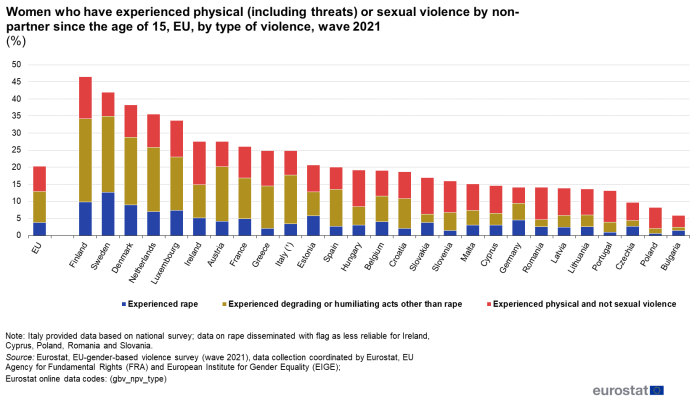
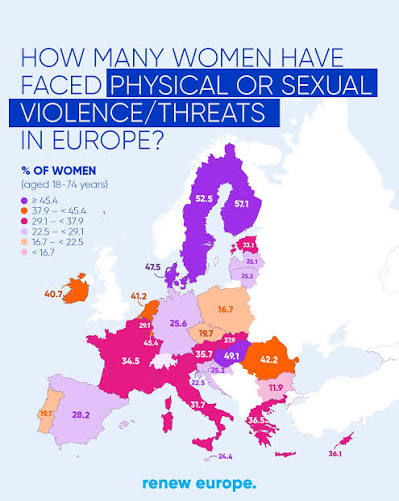
Rape statistics show a horrific monumental rise in rapes.Sweden - 57 rapes for 100,000. England and Wales, over 60 per 100,000.These statistics may be higher with underreporting, definition discrepancies and legal outcomes where low conviction rates demonstrate the impotence of legal systems.
In one rape in Sweden for a girl named Maye, the pathetic judges ruled that the rape did not last long enough to be a ‘serious crime’ and the Eritrean rapist was only sentenced to three years in prison. The rapist was not deported because it wasn’t an ‘extremely serious crime’.So this is just institutional and individual official rot.
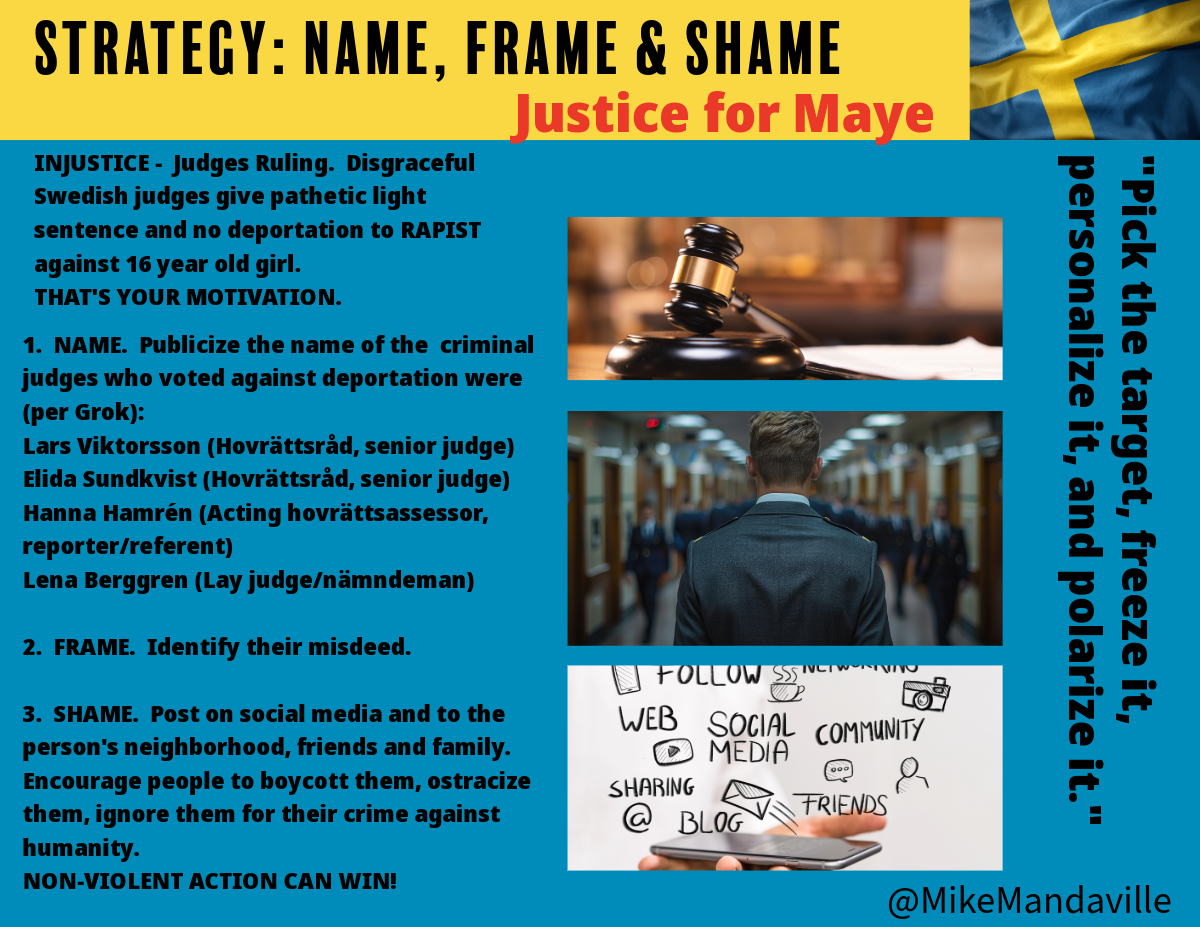
By placing refugee status into any equation dealing with assault and rape under the Rule of Law, the law is distorted from an impartial decision.If a country operates as a Western democracy or republic under the Rule of Law, then the refugee learns, adapts and embraces its cultural and legal framework - not the other way around as virtue signaling moronic politicians have been doing.If court officials and judges cannot see this basic concept, they are the rot and should be publicly named and shamed.The courts and police in many cases like Maye and certainly the UK Rape Grooming Gang scandal did not just fail these Innocent Young Girls. It betrayed them.
This is not hyperbole. This is the documented record. And the documented record is why a film about a vigilante killing criminal migrants and corrupt officials achieved 16 million views. Not bec
ause the audience is bloodthirsty.
Because the audience has been failed, and they know it.
The Film That Couldn't Be Stopped - Because It’s Truth.
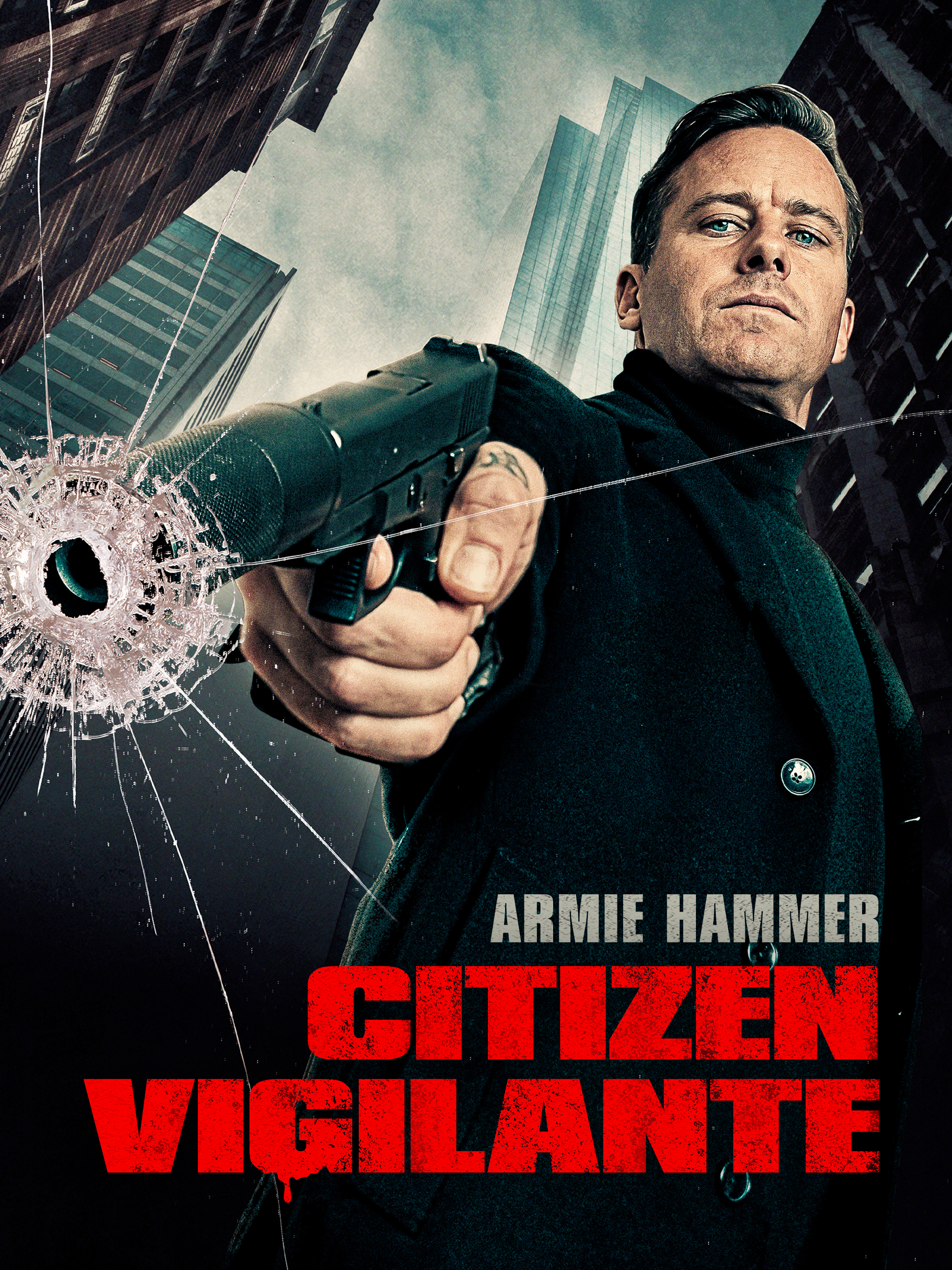
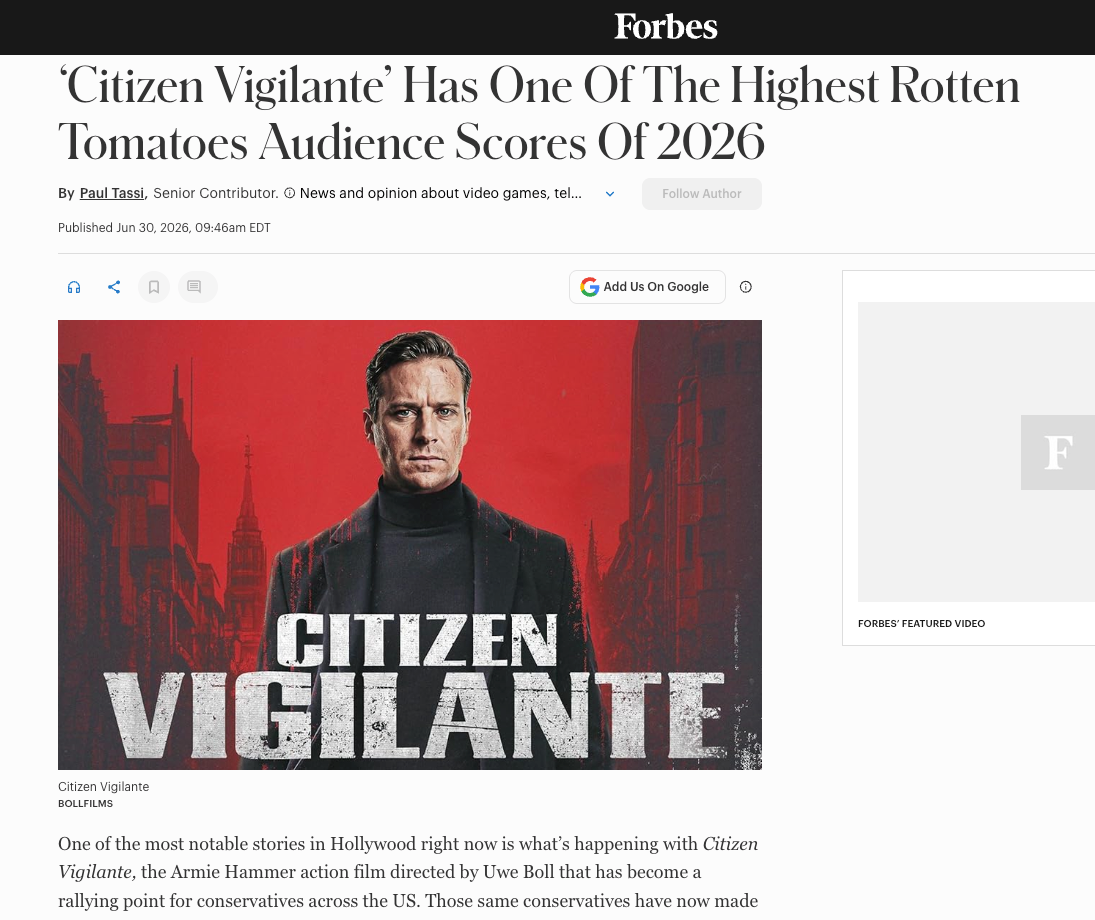
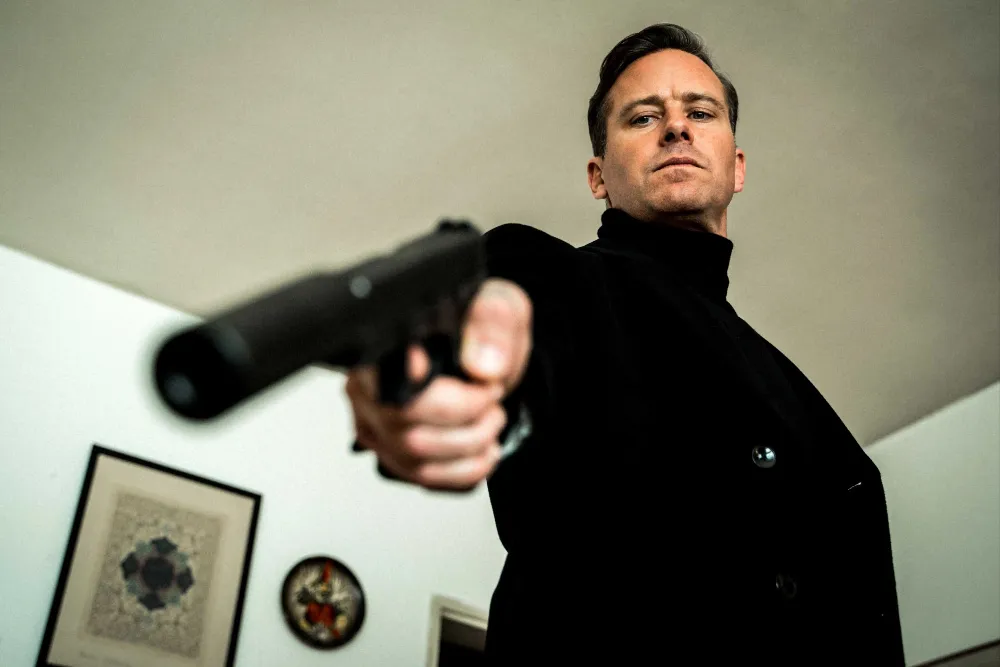
Directed by Uwe Boll — the 60-year-old German filmmaker best known for critically savaged video game adaptations — Citizen Vigilante stars Armie Hammer as an American abroad in Europe, on a blood-soaked mission to eliminate criminal migrants and corrupt government officials who protect them. It is blunt, operatic, and deliberately provocative.
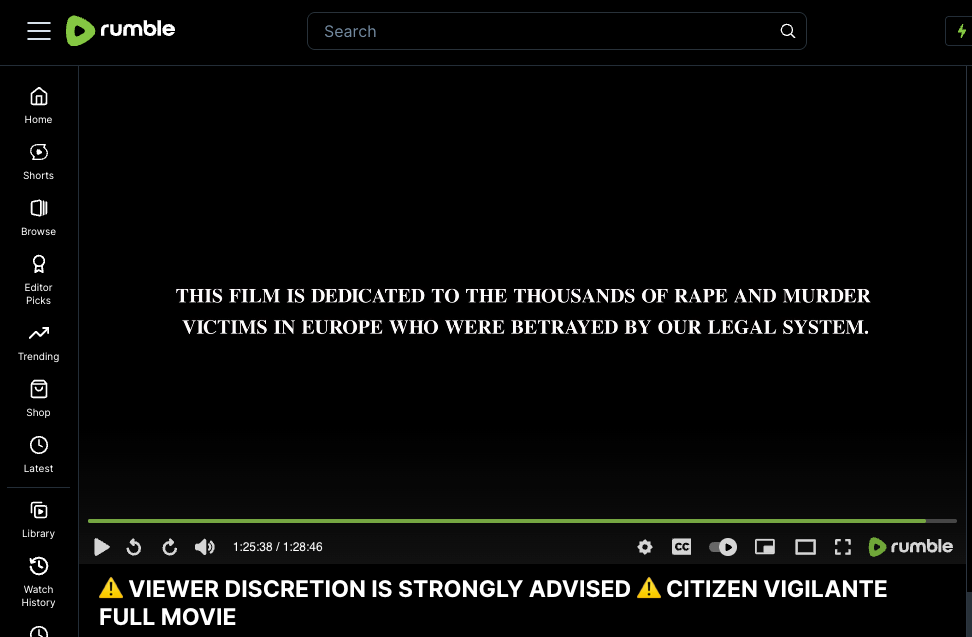
Released in U.S. theaters on June 19, 2026, the film was denied an age certification by Germany's FSK ratings authority — effectively banning it from German cinemas. The stated reason, according to Boll himself, was that the film was deemed to "incite violence against migrants." Boll called it censorship. He was right.
What happened next is a masterclass in what Elon Musk correctly identified as the Streisand Effect. What is the Streisand Effect?The Streisand effect is a phenomenon where an attempt to hide, censor, or remove information inadvertently causes the information to be publicized far more widely than it would have been otherwise.The term was coined by tech writer Mike Masnik in 2005. It is named after singer and actress Barbra Streisand. In 2003, Streisand sued a photographer for $50 million to force the removal of an aerial photograph of her Malibu cliff-top home, which had been taken for a coastal erosion study. Before the lawsuit, the image had been downloaded only six times; following the heavy-handed legal action, hundreds of thousands of people flocked to view the photo.
Rather than disappearing quietly, Boll released the film in its entirety on X for 48 hours. Musk — who has 240 million followers on the platform he owns — shared the full 88-minute film from his personal account. It garnered 16 million views in two days. The film climbed to No. 1 on Apple TV's charts. A sequel was announced before the dust had settled.
Variety's critic called it "violent, incoherent, morally bankrupt." The audience gave it 95% on Rotten Tomatoes.
That gap — between what critics think and what audiences feel — is the entire story.
German Censorship and the X Factor
Let's be precise about what Germany did and didn't do. The FSK did not grant Citizen Vigilante a rating. Without a rating, a film cannot be distributed in German cinemas. The mechanism is administrative, not judicial — but the outcome is identical to a ban. The message is unambiguous: this story cannot be told here.
What the German authorities failed to anticipate was that the cultural gatekeeping infrastructure they relied on for decades no longer has a monopoly. The film didn't need German cinemas. It didn't need a distributor. It needed one post from one man with 240 million followers.Then thousands if not millions of people who saw the post and the film and shared it - because it spoke the Truth.
This is the new landscape. Institutions that once controlled the flow of information — regulatory bodies, studio distributors, mainstream critics — have been functionally disintermediated. The EU globalist mentality of control, financial blackmail for obedience and the imposition of quotas and endless bureaucratic rules is shattering.X is not a niche platform. It is a public square, and when the public square hosts a film that governments have tried to suppress, the suppression itself becomes the story, and the story draws a crowd.
The German government's intervention didn't protect its citizens from dangerous ideas. It handed those ideas a megaphone.
The Broken Social Contract
There is a specific kind of fury that emerges when citizens understand that the state, its institutions and official have traded their safety for ideological comfort. It is not the anger of people who want chaos. It is the rage of people who believed in institutions — in police, in prosecutors, in elected officials — and discovered that those institutions placed a higher value on not being called racist than on protecting children from serial rape.
The social contract is not complicated. Citizens surrender a monopoly on violence to the state. In return, the state provides protection. When the state fails that bargain — not occasionally, not through incompetence alone, but systematically, consciously, for decades — the contract breaks. And when the contract breaks, culture rushes in to fill the void.
Citizen Vigilante is a fantasy of restored justice. Its protagonist does what the state refused to do. He identifies criminals. He holds them accountable. He does not wait for a police report to be buried, a prosecution to be declined, an inquiry to gather dust on a shelf. The film is crude. The audience doesn't care, because the fantasy it offers is not crude at all. It is the fantasy of consequence. FAFO.It is the fantasy that someone, somewhere, will be made to answer.
That fantasy is indistinguishable from a demand.
The Cultural Clash Institutions Refused to Name
Western liberal democracies spent decades constructing a framework for discussing cultural difference that systematically disabled honest analysis. The result was a situation in which government officials and police commanders knew the ethnic and cultural profile of grooming gang perpetrators, knew it was relevant to understanding the pattern and scale of the crimes, and chose silence — or worse, active obstruction — to avoid confrontation with that reality.
This is not a defense of xenophobia. It is an indictment of cowardice.It is evidence of willful intellectual denial.The logic of the West in its analysis from factual evidence was denied, redirected and obliterated for the sake of societal emotional virtue signaling.
There are specific cultural attitudes toward women, toward non-believers, toward criminal conduct within tribal hierarchies that are fundamentally incompatible with the legal and ethical framework of Western countries. Stating this plainly is not bigotry. It is the precondition for any serious policy response. When institutions refuse to state it — when they punish those who do — they do not prevent the problem from existing. They prevent themselves from solving it.
The women of Cologne were not failed by xenophobia. They were failed by officials who, in the immediate aftermath of mass sexual assault, prioritized narrative management over victim support, and press officers over police investigators.
If governments will not speak clearly about what is happening to their citizens, culture will. Art will. Sometimes the art will be rough-edged, politically inconvenient, and easy to condemn on aesthetic grounds. The condemnation will miss the point entirely.
How Film Has Always Changed Politics
The idea that culture shapes political consciousness is not new. The historical record is unambiguous.
Elia Kazan's Gentleman's Agreement (1947) confronted American audiences with the casual, systemic antisemitism embedded in their own society — not in Nazi Germany, in New York and Connecticut. It won three Academy Awards and contributed measurably to the political environment that produced anti-discrimination legislation.
Stanley Kubrick's Dr. Strangelove (1964) did something that no Senate hearing or newspaper editorial had managed: it made the nuclear deterrence doctrine look genuinely, irredeemably insane. It reached audiences that policy papers never would. It shifted the cultural mood in ways that shaped arms control debates for a generation.
The Manchurian Candidate (1962) dramatized anxieties about political manipulation and institutional corruption that were, at the time, almost unspeakable in mainstream American politics. John Frankenheimer made them speakable — and watchable.
Sidney Poitier's back-to-back 1967 releases — Guess Who's Coming to Dinner and In the Heat of the Night — landed in American cinemas while cities were burning, while civil rights legislation was being fought over inch by inch. They didn't report the conversation. They changed it.
Alan J. Pakula's All the President's Men (1976) arrived two years after Nixon's resignation and codified a specific mythology of investigative journalism as the last defense of democracy. It shaped how a generation of Americans understood power and accountability. It sent young people into newsrooms for decades.
Oliver Stone's JFK (1991) — contested, polemical, frequently factually dubious — nonetheless forced the U.S. government to pass the President John F. Kennedy Assassination Records Collection Act of 1992. A movie. A controversial movie made by a director many considered irresponsible. It changed federal law.
The pattern is consistent. Films that ask questions institutions don't want asked, that give voice to suspicions institutions want suppressed, that dramatize fears and rages that polite discourse cannot contain — those films matter. They matter not because they are always right, but because they are uncontainable. They reach people. And people, reached and moved, become political actors.
Citizen Vigilante is operating in this tradition. Not with the artistic accomplishment of Kubrick or Kazan — its Rotten Tomatoes critics' score makes that clear — but with the same fundamental dynamic. It has given form to something large numbers of people feel and feel intensely: that the state has failed them, that the media has lied to them, and that justice is no longer being administered equally.
Why Audiences Forgave the Film Its Flaws
Here is the critical question. Why did 16 million people watch a film that critics near-unanimously dismissed? Why did audiences give it 95% on Rotten Tomatoes while professional critics savaged it?
Because the audience is not watching for cinematography. They are watching for recognition.
When a film — however imperfect in craft — reflects back to an audience something they know to be true but have been told they cannot say, that film becomes something more than entertainment. It becomes validation. It becomes community. It becomes evidence that they are not alone in what they see and what they feel.What their neighbors, friends, co-workers are seeing and feeling with their own eyes.And what those neighbors, friends, co-workers may have actually experienced with rape, assault, murder and abuse in their daily lives.In that stark moment of realization, these people can see the lies and manipulation of their institutions and officials as compared to the reality.Citizen Vigilante spoke for them.
Citizen Vigilante is asking questions that official discourse has been suppressing: What happens when the state stops protecting you? What is the moral status of violence in the absence of legal justice? Who bears responsibility when institutions designed to prevent harm instead choose to enable it?
These are not comfortable questions. They are not questions with easy answers. They are certainly not questions that German regulatory authorities wanted a film to be asking in their cinemas. But they are essential questions — the kind that a functioning democracy requires its citizens to wrestle with, not have banned from discussion.
The audience's forgiveness of the film's artistic shortcomings is itself a political act. It is a declaration that the questions matter more than the production value. It is a refusal to be told, once again, that the conversation is inappropriate, that the anger is misdirected, that the concern is bigotry dressed up in the language of safety.
The Demand You Need to Make
If you take nothing else from Citizen Vigilante — not the film, not its controversy, not its extraordinary viral spread — take this: culture is where political will is formed before it ever reaches a ballot box, a parliament, or a courtroom.
The people who understood that first were the ones who tried to suppress the film. They knew what it represented. They knew the questions it was asking. And they moved, with administrative precision, to ensure those questions could not be asked in German cinemas.
They failed. They will keep failing. The infrastructure of cultural suppression was built for a world with limited distribution channels, compliant press, and audiences who had no alternative. That world is gone. No longer can the media in German, the UK, France or the US keep the Truth from discussion and open forums.The corporate legacy media in the US like CNN, NBC, CBS (though Bari Weiss is working to fix it) NYT, Washington Post, etc., has propagated the approved narrative and their agenda at the expense of Truth.“Democracy Dies in Darkness” has been the official slogan of the Washington Post since 2017 but they little realize that they turned off the Light of Truth decades ago.
Demand honesty from your institutions. More than that, identify the ‘enablers’ of injustice who are judges, police, officials, midlevel fathead bureaucrats and more.By name and face.Flood their neighbors, friends and family with their infamous decisions of injustice.
Demand equal justice — for every victim, regardless of the politics of their victimization. Demand a press that reports what happened in Rotherham with the same ferocity it would apply to any other organized criminal enterprise operating for decades with institutional protection. I know men - fathers, sons, brothers, uncles - who have read the UK Rape Grooming Gang Report and are bursting with absolute feral outrage.The descendants in the all European countries of the great warriors of the past should feel the rage in their blood.Citizen Vigilante is a temporary release for these emotions against vast institutional and official failure.
And watch what culture does when institutions, police, judges and official fail. Watch closely. Because the next film won't need Elon Musk to share it.
It will share itself.